Health Partners





Date: June 8, 2026 | Category: Health
Breast cancer remains the most prevalent malignancy affecting women worldwide. In Ghana, this clinical challenge is steeply compounded by systemic barriers: an estimated 50% to 70% of patients present with advanced disease (Stage III or IV), drastically limiting successful treatment outcomes and survival rates.
To counter this crisis, the Breast Cancer Unit at Holy Family Hospital (HFH) in Techiman was established in December 2023. Born from a strategic international partnership with Medical Support in Partnership (MSIP) based in Hamburg, Germany, this initiative is actively rewriting the narrative of oncology care in the Bono East Region.
The Pre-Intervention Landscape: A Region Unserved
Before December 2023, the infrastructure for breast health in Techiman and the broader Bono East Region faced severe structural and clinical challenges:
Following a rigorous feasibility and assessment visit in October 2023 by MSIP’s leadership team—Dr. Ulf Buer, Prof. Susanna Hegewisch-Becker, and Dr. Kirsten Graubner—a definitive roadmap was drawn. Dr. Kingsley Bosompem was tasked with authoring the operational proposal and subsequently appointed to steer the new unit forward.
A Multi-Faceted Intervention Model
MSIP’s targeted intervention catalyzed a rapid upgrade of Holy Family Hospital’s clinical capabilities across three fundamental pillars:
1. Infrastructure and Cutting-Edge Equipment
2. Clinical Capacity Building & International Exposure
Current Impact: Operational Metrics and Scope:
Today, the Breast Cancer Unit operates as a fully integrated, high-volume service hub, translating infrastructure into daily clinical outcomes across several core areas of operation:
Comprehensive Clinical Management: The dedicated Breast Clinic has scaled rapidly to meet local demand, actively managing a steady volume of 80 to 100 oncology patients every month.
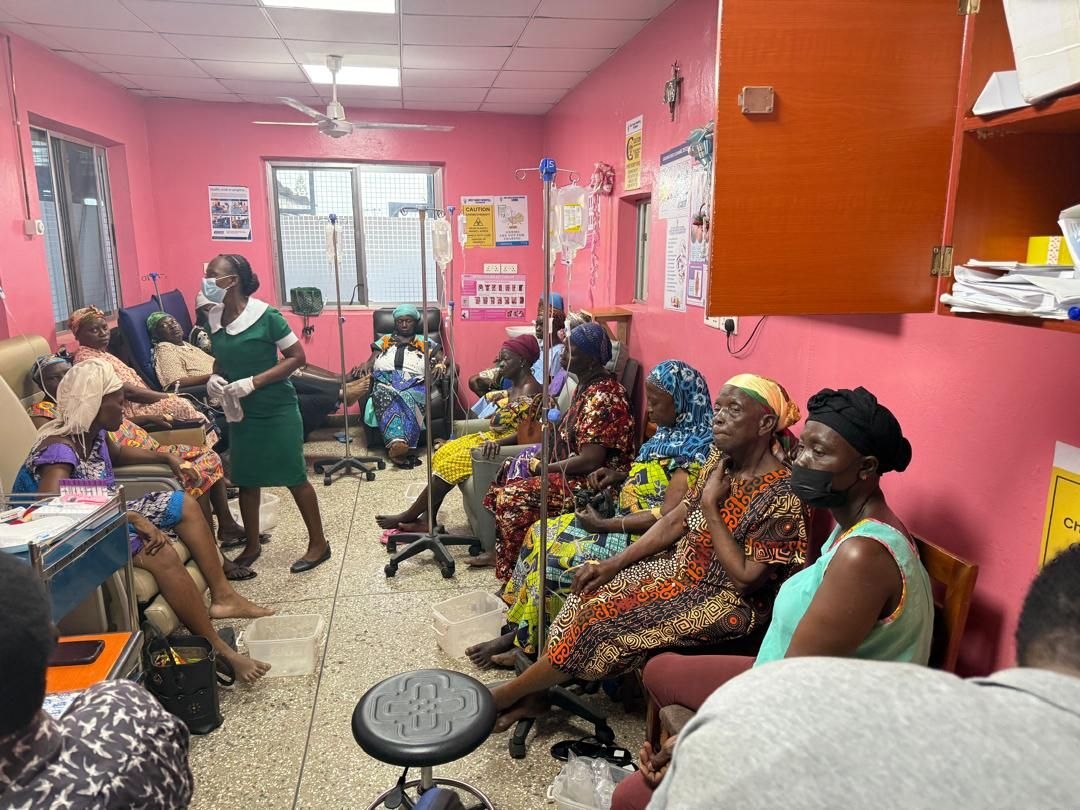
Localized Chemotherapy Services: Operating seamlessly from Monday through Friday, the specialized Chemotherapy Unit regularly administers life-saving treatment regimens to 30 to 40 patients weekly, entirely removing the need for arduous regional travel.
Early Detection and Diagnostics: The facility provides daily walk-in breast screening alongside advanced diagnostics. This includes specialized ultrasound imaging and image-guided core biopsies for rapid, precise tissue confirmation.
Advanced Surgical Interventions: The surgical team executes full-scope clinical interventions on-site, including life-saving mastectomies and complex breast surgeries tailored to advanced presentations.
Community Advocacy and Outreach: To dismantle cultural stigmas, the unit leads localized advocacy initiatives, conducting regular educational campaigns and public health awareness broadcasts via regional radio programming.
Overcoming Persistent Challenges Through Innovation
While clinical milestones are significant, the unit continues to battle deep-seated structural and cultural roadblocks: financial constraints for low-income individuals, delayed clinical presentation driven by fear or cultural myths, limited access to high-cost targeted biological therapies (such as Trastuzumab), and infrastructure constraints relative to growing patient volume.
To systematically dismantle these hurdles, MSIP and Holy Family Hospital launched an ambitious one-year pilot project in October 2025 titled "Enhancing Breast Cancer Outcomes in Resource-Limited Communities through Partnership-Based Interventions."
Strategic Objectives of the Ongoing Pilot Project (Ending October 2026):
Conclusion
The collaboration between Holy Family Hospital, Techiman, and Medical Support in Partnership (MSIP), Hamburg, serves as a powerful blueprint for international medical cooperation. By seamlessly blending infrastructure investments, targeted clinical training, financial patient support, and aggressive community-level advocacy, this partnership proves that high-quality, equity-driven oncology care is entirely achievable within resource-limited settings.
Through continued investment and local dedication, the unit is not only catching cancer earlier—it is giving women their lives back.
For any further questions regarding our services, public health educational outreach, or to schedule a professional clinical appointment for breast care screening, please connect directly with our dedicated customer care line:
Contact Hotline: 0202219048
Available Platforms: WhatsApp, Telegram, and Voice Call.